
How the female cycle works

A look at the different hormones and their effects

The female menstrual cycle is a fascinating and complex process controlled by various hormones. Every month, the female body undergoes a series of changes that divide the cycle into different phases.

Below, we take a closer look at the various hormones that play an important role during the cycle and how they affect the female body.
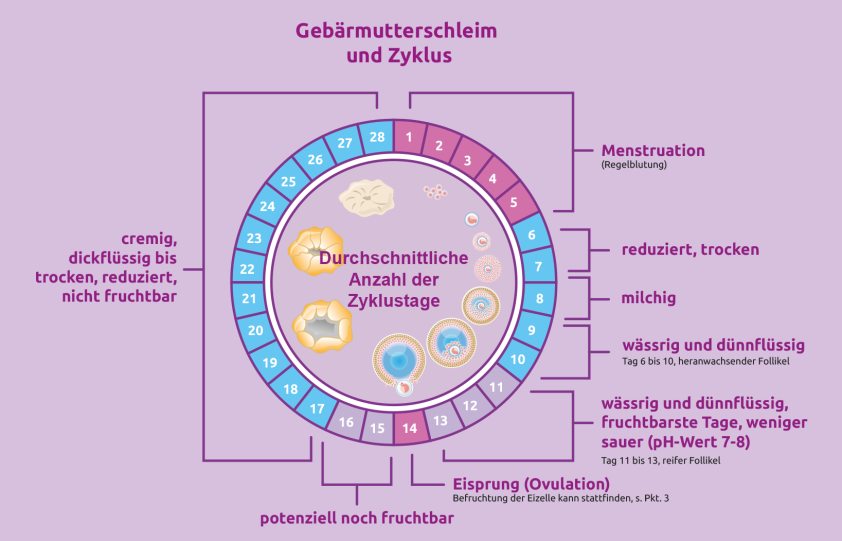

The phases of the menstrual cycle

The menstrual cycle consists of four main phases: the menstrual phase, the follicular phase, the ovulation phase and the luteal phase. Each of these phases is controlled by different hormones, which work together to regulate the entire cycle.

Oestrogen – The Regulator of the Cycle

Oestrogen is one of the most important hormones in the female body and is produced during the follicular phase (from the start of menstruation until ovulation).

It has a variety of functions, including stimulating the growth and maturation of the egg, thickening the lining of the womb and boosting libido.

Oestrogen also affects mood and energy levels throughout the cycle.

Progesterone – The pregnancy hormone

Progesterone is produced during the luteal phase following ovulation. It prepares the uterine lining for a potential pregnancy and ensures that a fertilised egg can implant itself there.

If pregnancy does not occur, progesterone levels drop, triggering menstrual bleeding.

Follicle-stimulating hormone (FSH) and luteinising hormone (LH)

FSH and LH are gonadotropins, which are produced by the pituitary gland.

FSH stimulates the growth and maturation of the egg in the ovaries during the follicular phase.

LH triggers ovulation and ensures that the mature egg is released from the follicle.

Hormonal balance and cycle regulation

Balanced hormone levels are crucial for a regular and healthy menstrual cycle. Fluctuations or imbalances in hormones can lead to irregular cycles, mood swings, PMS symptoms and other hormonal problems.

A well-functioning hormonal balance enables women tobetter understand and naturally support their cycle. In the event of persistent irregularities or hormonal problems, it is advisable to seek professional medical support to identify the cause of a possible hormonal imbalance.

A conscious and informed understanding of one’s own body and menstrual cycle can help women optimally support their health and fertility.

Author Martin Kessel

Martin Kessel is the co-founder of ProFamilia Vertriebsgesellschaft (1987) and the Founder and CEO of Kessel Medintim GmbH. He has more than 45 years of experience in contraception and contraceptive counseling. He played a leading role in bringing the Caya® diaphragm to market and in the development of the Singa® diaphragm range. His work focuses on the development of medical devices for women's health, evidence-based education, and advancing reliable information on diaphragms and non-hormonal contraceptive methods.

8be9defe1bdc2971f77bdb7bca55dfcccc9bf3f1

Any questions? We answer all questions personally and promptly.